Research Projects
Naturalistic Music & Brain Dynamics Current
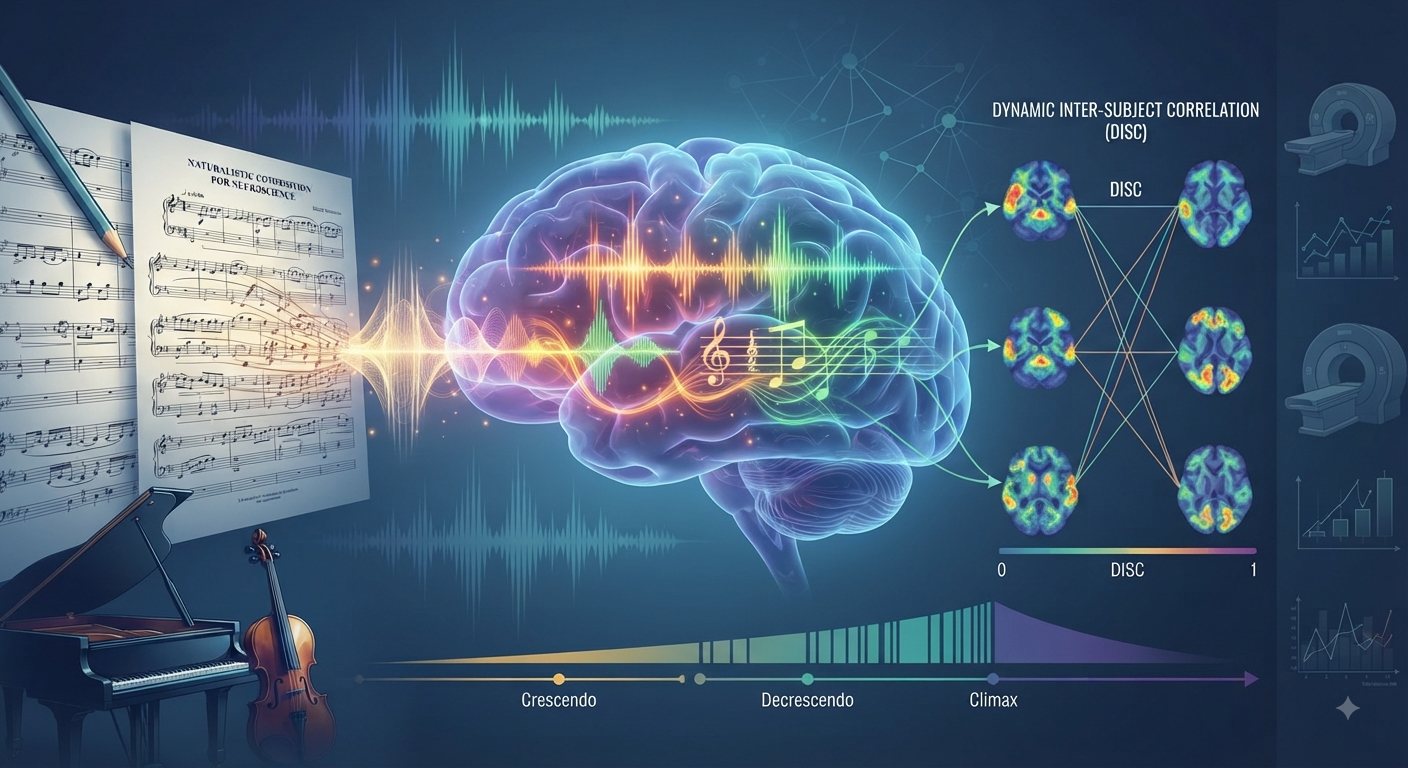
Music is a complex, continuously evolving experience that engages many brain systems
simultaneously. My research uses naturalistic fMRI to investigate how the brain responds to
realistic musical experiences, moving beyond simplified experimental stimuli. As part of
this work, I developed an original musical composition specifically for neuroscience
research — a two-part piece titled Brain Movement (Part I and Part II, 8 minutes
each), recorded with 25 musicians, allowing us to study brain responses to the same rich
musical experience across people with different musical backgrounds.
I am particularly interested in how brain activity unfolds over time and how similar or
different neural responses are between musicians. Using
dynamic inter-subject correlation, I investigate how the brain's response
to music changes throughout the listening experience and how these dynamics may relate to
musical expertise. This work aims to provide a more naturalistic understanding of how
musical experience is represented in the brain.
Music Learning & Longitudinal Neuroplasticity MSc → PhD Planned
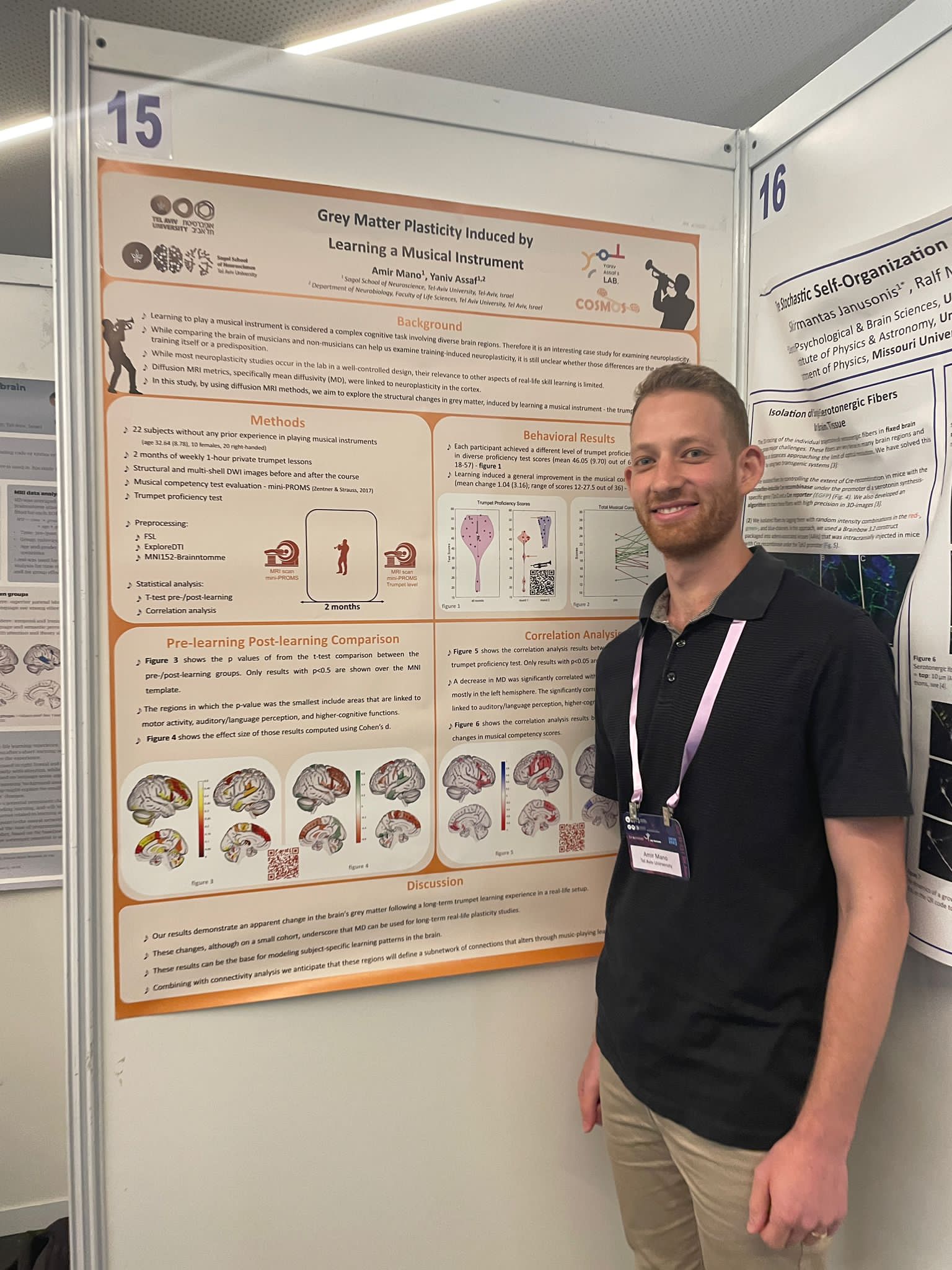
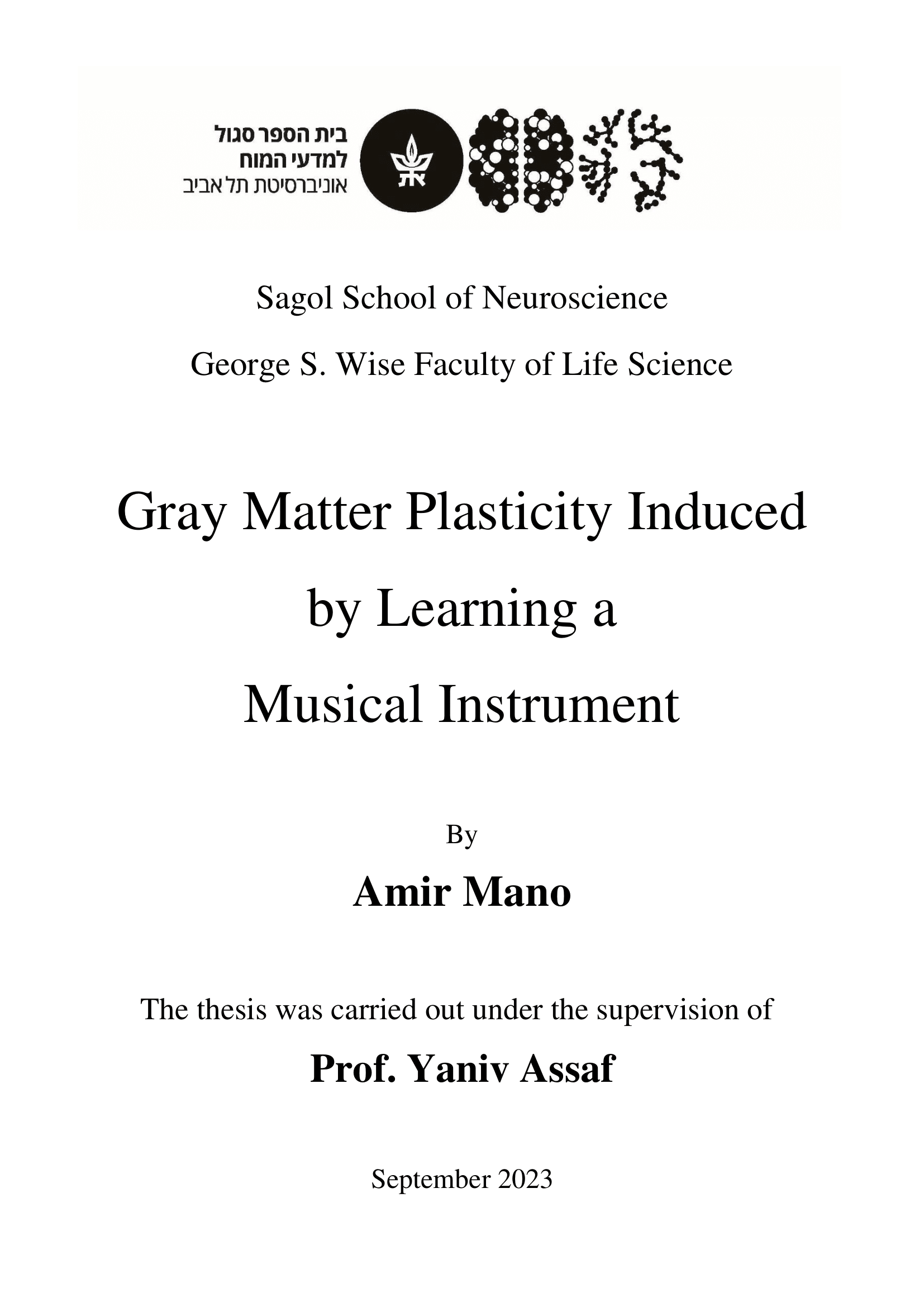
My research into music learning began during my MSc, where I ran a longitudinal study
following 33 trumpet learners over the course of their training. Using
diffusion MRI, I examined microstructural changes associated with musical
learning, providing evidence that even a relatively short period of acquiring a new
musical skill can be reflected in the brain. This work formed the foundation for my broader
interest in understanding how musical training drives neuroplasticity.
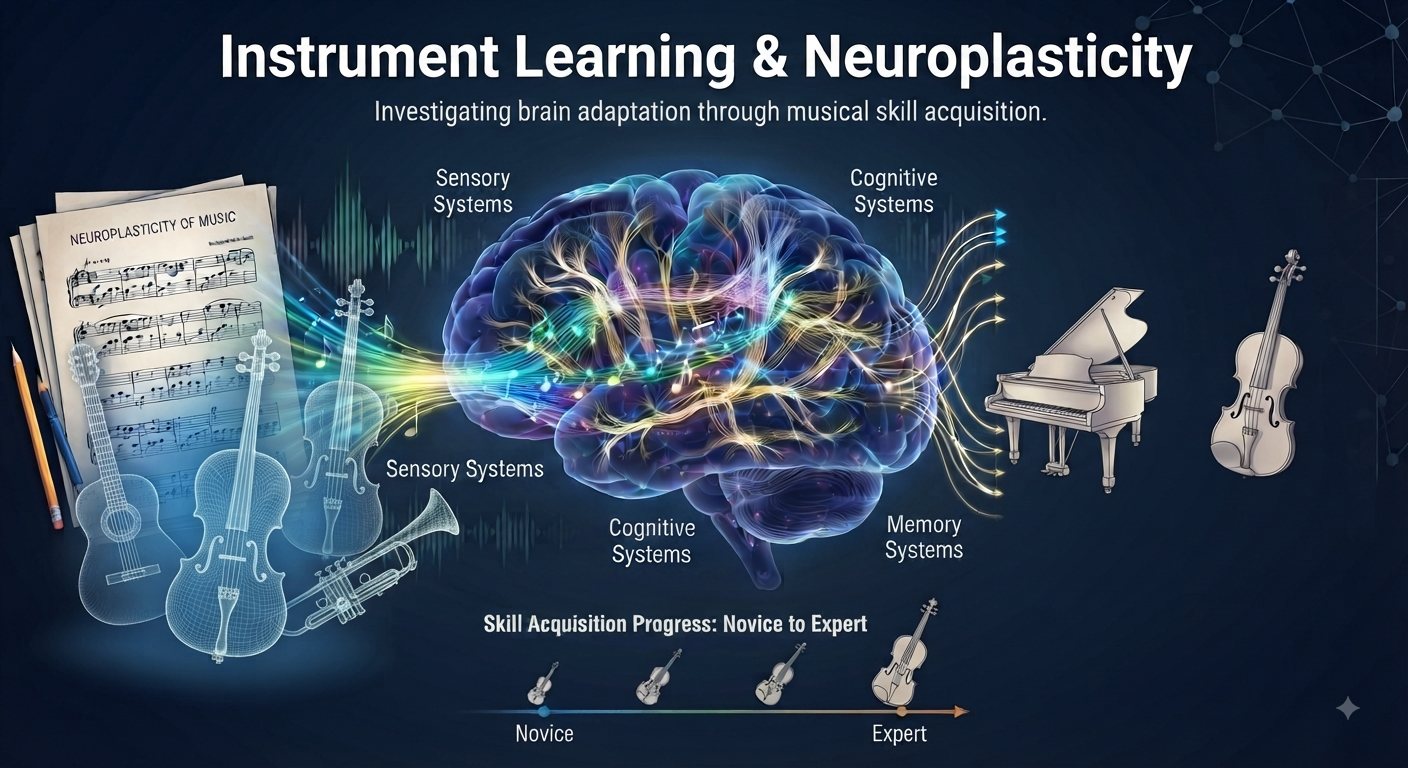
Building on this work, my PhD will expand this design considerably: a longitudinal study
with more participants, across multiple musical instruments rather than trumpet alone, using
a broader multimodal MRI approach. By following people as they learn
different instruments from the beginning of their training, I aim to track how brain
structure, microstructure, connectivity, and function change throughout the learning
process — comparing which aspects of neuroplasticity are shared across instruments and which
are shaped by an instrument's specific demands.
A particular focus of this work is structural connectomics: studying the
brain not only as a collection of individual regions, but as an interconnected network. This
approach allows me to investigate how musical learning may alter the organization of
connections between brain regions, providing a broader picture of neuroplasticity and how
the brain adapts to complex, long-term skills.
This research is conducted under the supervision of Prof. Yaniv Assaf, in the
Yaniv Assaf Lab.
Research Media
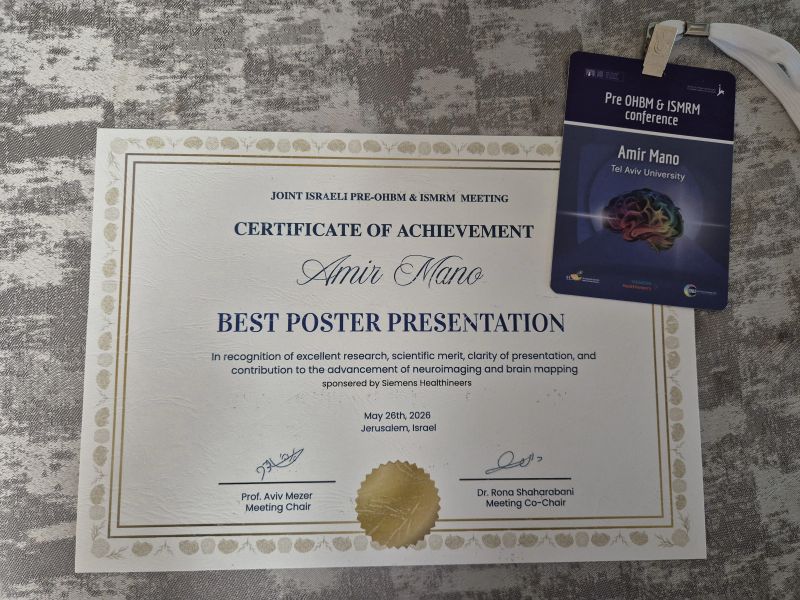
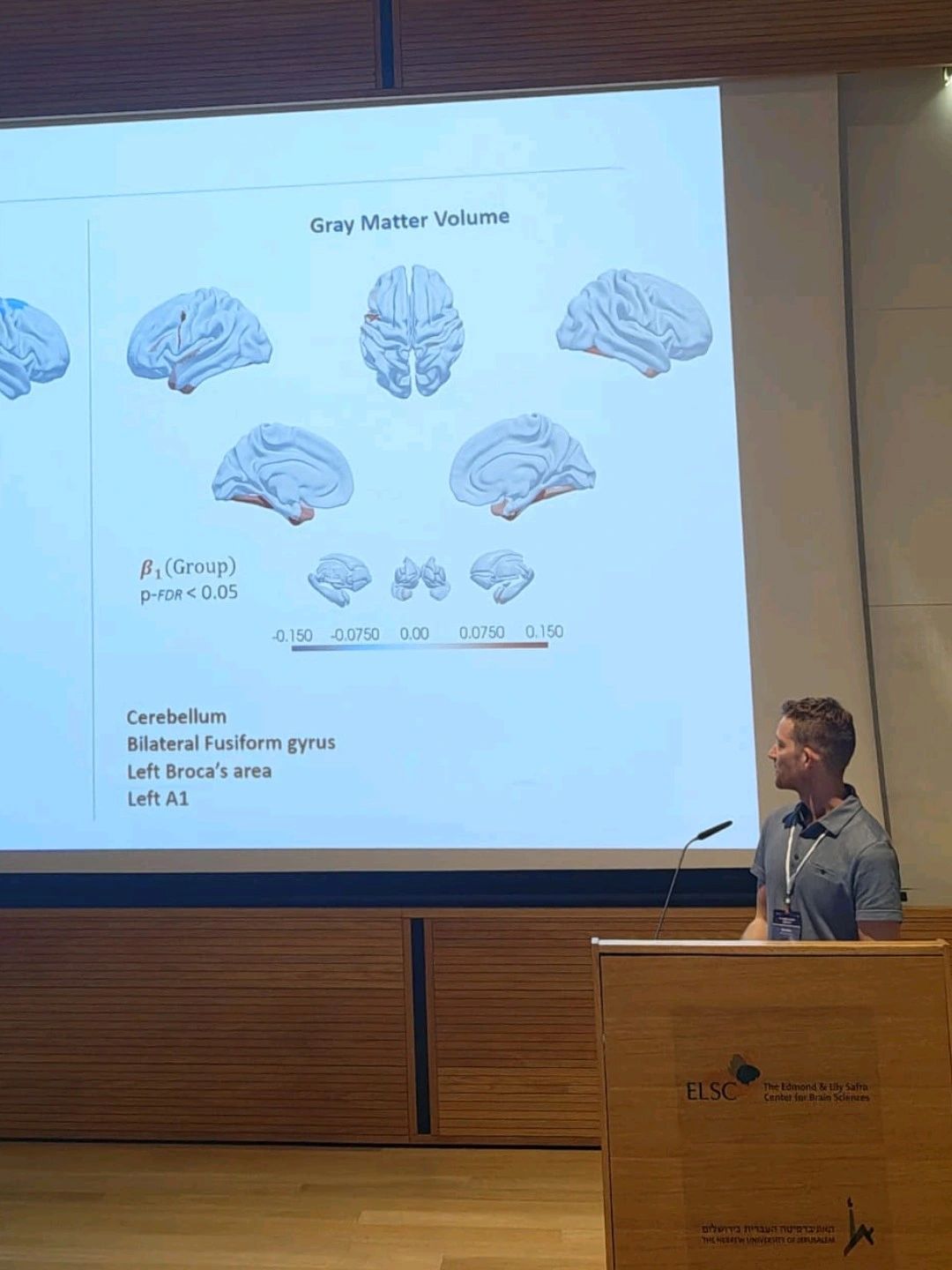
Photos, videos, and links from my research and conference presentations.
Photos
Lab Video
Yaniv Assaf Lab
My PhD is conducted in Prof. Yaniv Assaf's lab, studying brain connectivity and plasticity.
Visit Lab WebsiteMSc Thesis
Want the full picture? View my CV or get in touch.